Accelerating to Commercial Production

Everyday our technology is assisting hundreds of pilot and production facilities around the world to reliably manufacture and bring their products to the market faster. PSL Agitated Nutsche Filter Dryers (ANFD) are being used in a wide range of industries such as pharmaceuticals, fine chemicals and precious metals.

Our ANFD Filter Dryer production systems were developed to efficiently wash and isolate solids in the most complex chemical synthesis processes and challenging production environments. Our solutions are designed to overcome well-known challenges faced by manufacturers when using traditional production methods, such as Büchner filtration and oven tray-drying.

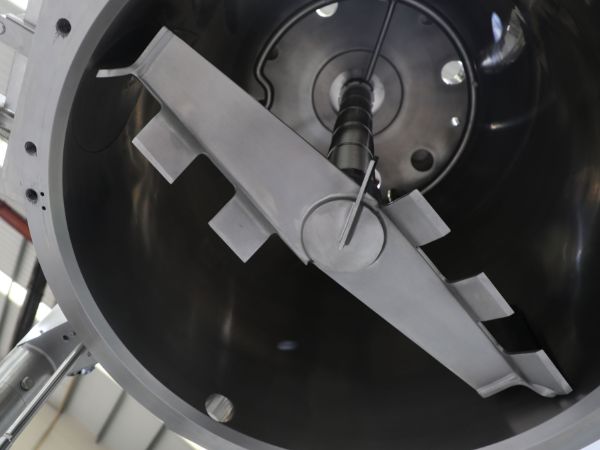
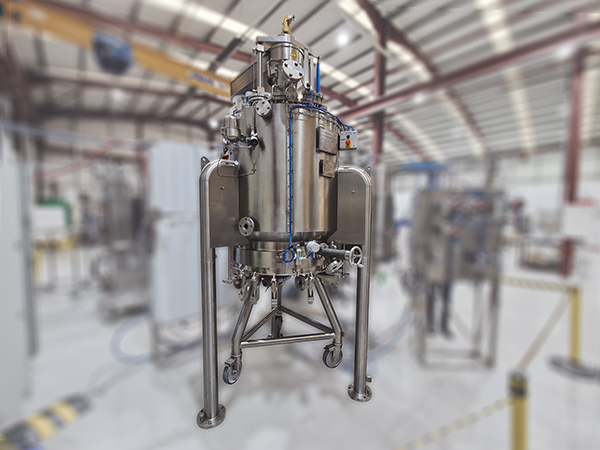
Each of our filter dryers consists of an agitated vessel designed to work under vacuum and under pressure. The vessel can be made of either stainless steel or alloy 22 and can be coated with specific materials such as PFA (perfluoroalkoxy alkane). It is also equipped with a heated jacket and heated agitator for efficient product drying and mixing.
Agitated Nutsche Filter Dryer (ANFD) - Production

Features and Benefits

PSL’s Agitated Nutsche Filter Dryers are an all-in-one piece of equipment designed to comply with Good Manufacturing Practices (GMP) for regulated development and production activities. They allow process developers and manufacturers to complete a wide range of processes into one single system

> Slurry Filtration

> Product Washing

> Re-slurry

> Vacuum Drying

> Product Sampling

> Product Discharge

Agitated Nutsche Filter Dryer (ANFD) - Pilot

PSL’s strength lies in our comprehensive knowledge of the GMP regulations combined with our practical experience and knowledge of a wide range of manufacturing workflows.

Our PSL filter-dryers provide optimum levels of safety and quality and can be manufactured to comply with various industry practices (cGMP, GAMP, etc.), directives (ATEX, etc.), regulations (21 CFR Part 11, etc.) and initiatives (PAT, etc.) from industry regulators such as the FDA.
cGMP Compliant Logo

Over the last three decades PSL has earned the trust of our industry partners by delivering precision-built containment solutions to protect the health of their workforce.

Numerous industrial filtration and drying processes require to integrate containment technology in order to protect operators from highly toxic compounds and/or to protect sensitive products from a harmful production environment.

Our high containment systems guarantee operator protection and operate under negative pressure HEPA-filtered atmosphere. PSL isolators have been used globally to process highly potent compounds requiring extremely low Occupational Exposure Limit (OEL) such as 20ng/m3. These compounds can include High Potency Active Pharmaceutical Ingredients (HPAPI), cytotoxic and other hazardous substances.

Our containment solutions adapt to individual company needs either through rigid or flexible/disposable containment solutions.

PSL gloveboxes can be manufactured to comply with industry practices (cGMP, GAMP, etc.), directives (ATEX, etc.), regulations (21 CFR Part 11, etc.) and initiatives (PAT, etc.).
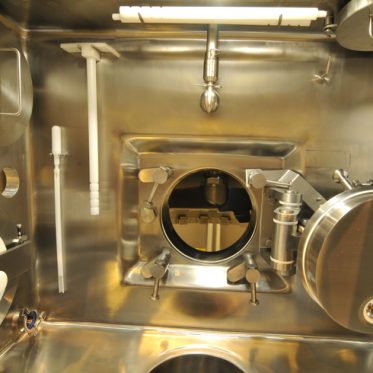
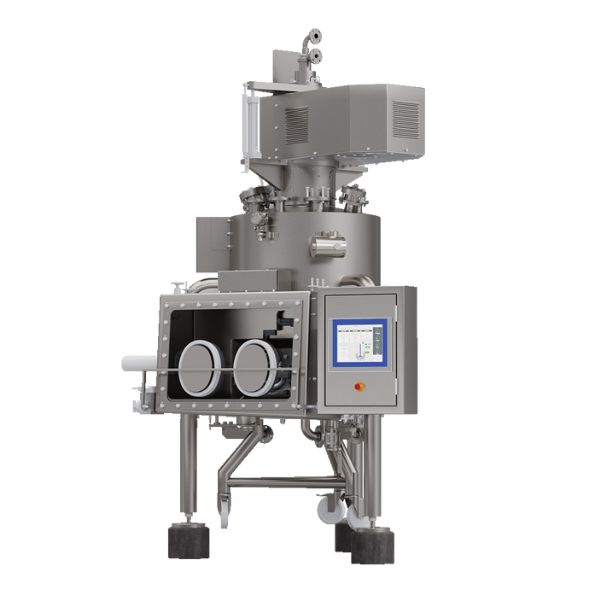
ANFD Containment PSL Filter Dryer

Selecting the right processing technology is critical to scaling up your process and ensuring production success.

Our renowned filtration and drying range is globally recognised to streamline the most complex scale-up process developments, from early R&D activities to GLP batches, pilot plant and ultimately GMP commercial production.

Our filter-dryer portfolio will allow you to perform scale-up and scale-down studies and maintain – at every scale – your various process objectives (e.g. product quality, product yield, batch consistency, etc.) and production parameters (e.g. filtration time, washing time, drying time, etc.).
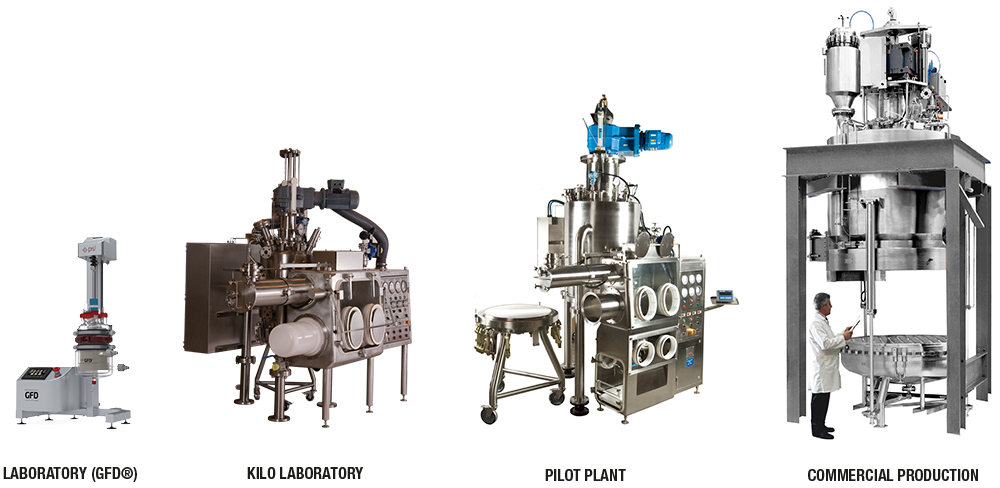
Agitated Nutsche Filter Dryer (ANFD) - Kilolab

Kilo Laboratory

Agitated Nutsche Filter Dryer (ANFD) - Pilot

Pilot Plant

Agitated Nutsche Filter Dryer (ANFD) - Production

Commercial Production

At PSL, we understand that your product is extremely valuable and that you must maximise your production yield in order to remain competitive in your market. The core features of our filter-dryers were designed keeping this crucial requirement in mind.

Upon process completion inside a PSL nutsche filter dryer, your valuable product can be recovered very simply by utilising the PSL agitator to automate the discharge process. Subsequently, the remainder of your batch – also called product heel – can be collected following the ‘’Direct Heel Recovery’’ method originally pioneered by PSL in the industry several decades ago.

This method has proven to be the most efficient for high yield productivity and it consists of manually raking the product heel into a PSL high containment off-loading glovebox (ergonomically designed and integrated by PSL). Thus ensuring a full product recovery under safe conditions for your operators, product and environment.
Need help identifying the right solution for your process?

Completing our online questionnaire leads to timely, informed and efficient discussions.

Please take a minute to confirm your process requirements by filling the online form below. This will allow us to select the right PSL Filter Dryer model for your specific process application.

Applications and Options

Find Out More

If you are looking for more detailed information on PSL Agitated Nutsche Filter Dryers, download the brochure here.

ANFD Brochure Cover 2024

FAQs

The main benefit of a Nutsche Filter Dryer over Buchner filtration is that the equipment can also dry the product. If we compare only the filtration aspects, the Nutsche Filter Dryer is superior in many ways such as the provision of a fully sealed/closed vessel. Nutsche Filter Dryers also provide vacuum filtration from below the mesh like Buchner Filters, but also pressure filtration from above the mesh. Pressure filtration allows much lower moisture content to be achieved.

Product washing is also more efficient using a Nutsche Filter Dryer. Gravity/displacement washes are carried out, as is possible with a Buchner Filter, but the agitator feature of a Nutsche Filter Dryer allows re-slurry washes to be performed, thus reducing the amount of solvent volume required and optimising the removal of impurities.

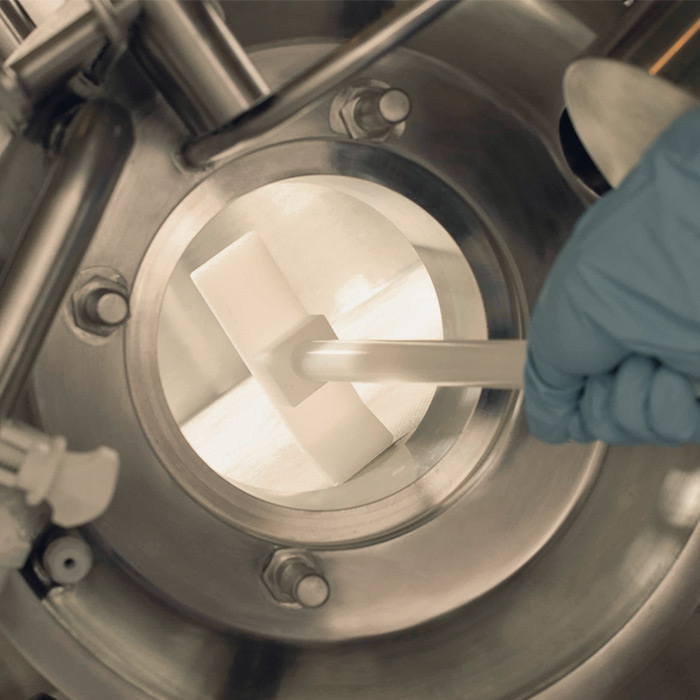
The profile of the agitator blades is angled, thus they provide different functions depending on the direction of rotation. One direction will provide a smoothing effect, whilst the other provides ploughing/gentle mixing.

Smoothing is carried out to remove any cracks that might appear through the cake. If these cracks are not removed they act as preferential channels for product washing solvents or gas during pressure filtration, thus hindering their efficiency.

Although filter dryer agitators can be adjusted in height, there is always a clearance with the mesh even in the lowest position. This volume of product is referred to as the heel. This heel can either remain in the filter dryer and be further processed with the next batch or can be manually removed using raking tools through PSL’s containment discharge solutions.

A Nutsche Filter Dryer is usually dimensioned against the expected solid volume, also referred to as cake volume. The maximum cake volume is determined by the agitator stroke (i.e. raised to its maximum height) in order to smooth the top surface of the cake.

Various mesh types exist but we can distinguish two major ones. These are Filtration Cloth Mesh, in materials such as Polypropylene, PEEK, PTFE, etc. and Metallic Sintered Mesh (multi-layered), in similar materials as the filter dryer vessel (316L Stainless Steel or Alloy C22).

Both types come in various porosities in order to suit various particle size distributions. The choice of mesh usually depends on the process and product characteristics, but can also be driven by your organisation’s structure.

A filtration cloth mesh could be easier to use in a multi-product environment where it would be used as a consumable in order to limit time spent in equipment cleaning and validation.

Metallic mesh, which is more costly, filters elements that would be cleaned in situ, along with the equipment. It is used more frequently in a single product environment or when plastic contact parts are not acceptable as part of the process.

Solids can be discharged via a side discharge plug, located level with the filtration mesh to minimise any product retention, either:

– through an automatic discharge hatch (frequent for large equipment or for feeding by gravity to a lower floor for packing-off).
– into a discharge containment solution which requires manual handling; this can be via rigid gloveboxes or flexible/disposable glovebags.

Some processes require the product to be removed in a slurry form, which can be done through a slurry valve situated above the filter mesh.

PSL has over 35 years of experience in containment and our experts will guide you through the correct selection process. The solution will depend on various factors such as:

  • the containment performance that the equipment must meet, usually driven by the OEL of the product(s) to be manufactured.
  • the batch sizes and manual handling limitations. Containment solutions are not the same if only a single container is required compared to when multiple containers are necessary.
  • the role of the Nutsche Filter Dryer within your process line. The containment approach will differ if it is the final step compared to if the product is to be transferred to further equipment downstream.

The containment transfer devices used can also differ – Rapid Transfer Port (RTP), Split Butterfly Valves (SBV), and Continuous Liner for example.